
Hydraulic vs Automatic Surface Grinding Machine: Which One Should You Choose?
Introduction
Choosing the right surface grinding machine is essential for improving machining efficiency, maintaining accuracy, and reducing production costs.
Among the most common machine types are hydraulic surface grinding machines and automatic surface grinding machines. While both provide excellent grinding performance, they are designed for different production requirements.
This guide compares their features, advantages, and applications to help you select the best solution for your workshop.
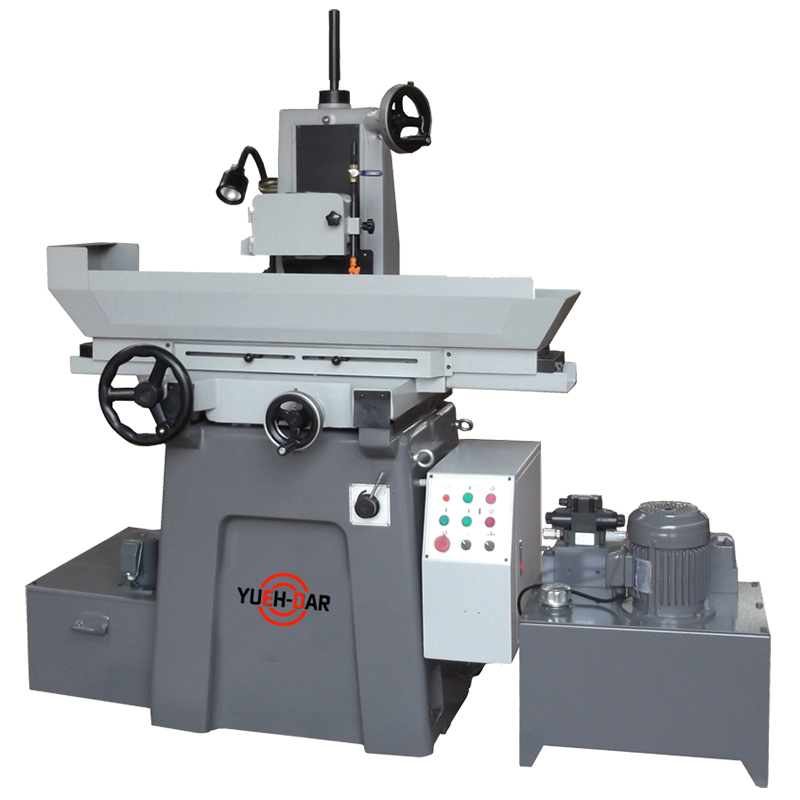
1. What Is a Hydraulic Surface Grinding Machine?
A hydraulic surface grinding machine uses a hydraulic system to drive the table movement automatically. The cross feed and vertical feed are generally operated manually or semi-automatically, making it suitable for general precision grinding.
Advantages
- Stable table movement
- Simple operation
- Lower investment cost
- Easy maintenance
- Suitable for small and medium batch production
Typical Applications
- Mold manufacturing
- Tool making
- Machine parts
- General precision machining
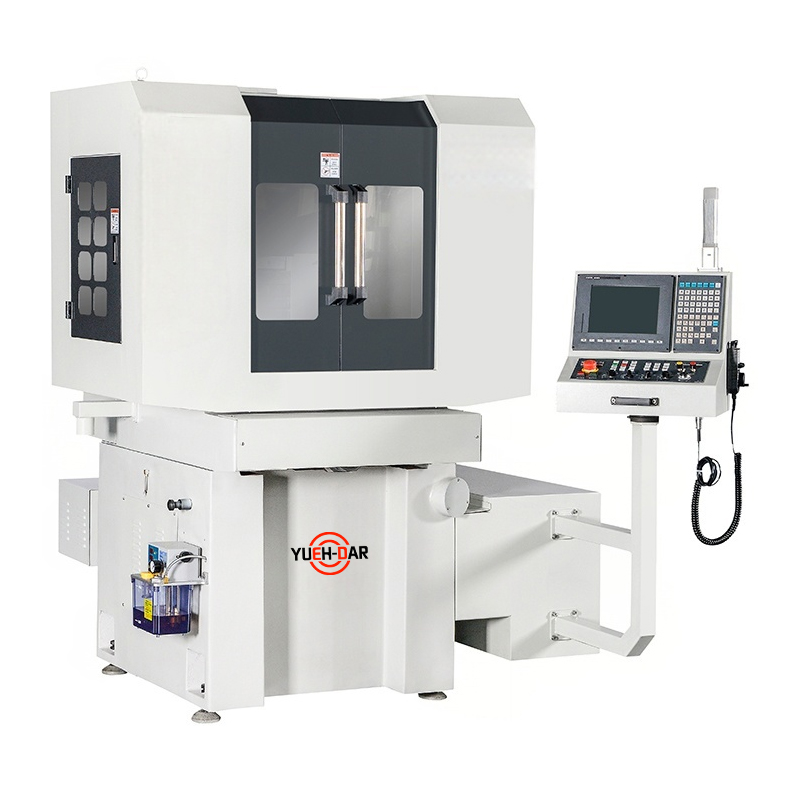
2. What Is an Automatic Surface Grinding Machine?
An automatic surface grinding machine automatically controls the table movement, cross feed, and vertical feed according to preset grinding cycles.
Compared with hydraulic models, it offers higher productivity and more consistent machining quality.
Advantages
- Higher production efficiency
- Reduced operator workload
- Better consistency
- Automatic grinding cycles
- Suitable for continuous production
Typical Applications
- Mass production
- Automotive components
- Precision mechanical parts
- Industrial manufacturing
3. Hydraulic vs Automatic Surface Grinding Machine
| Feature | Hydraulic | Automatic |
|---|---|---|
| Table movement | Hydraulic | Automatic |
| Cross feed | Manual | Automatic |
| Vertical feed | Manual | Automatic |
| Productivity | Medium | High |
| Operator workload | Higher | Lower |
| Repeatability | Good | Excellent |
| Investment cost | Lower | Higher |
| Best for | Small & medium batches | Medium & large batches |
4. Which Machine Should You Choose?
A hydraulic surface grinder is an excellent choice if you:
- Produce small batches
- Need flexibility
- Have a limited budget
- Perform general precision grinding
An automatic surface grinder is recommended if you:
- Run continuous production
- Require higher efficiency
- Need consistent machining quality
- Want to reduce manual operation
5. Factors to Consider
Before selecting a machine, evaluate:
- Workpiece size
- Required accuracy
- Production volume
- Operator experience
- Future production plans
Choosing the right configuration helps maximize productivity and reduce operating costs.
Conclusion
Both hydraulic and automatic surface grinding machines provide excellent precision and reliability.
Hydraulic models offer outstanding value for general machining applications, while automatic models deliver higher productivity for larger production volumes.
Selecting the right machine depends on your production requirements, machining accuracy, and long-term manufacturing goals.
Frequently Asked Questions
What is the difference between a hydraulic and an automatic surface grinding machine?
A hydraulic surface grinder uses hydraulic table movement with manual feed operations, while an automatic surface grinder performs grinding cycles automatically for higher productivity.
Which machine is better for small-batch production?
Hydraulic surface grinding machines are generally more economical and flexible for small-batch machining.
Are automatic surface grinding machines more accurate?
Both machine types can achieve high precision. Automatic machines mainly improve consistency and production efficiency.
Can a hydraulic surface grinder be upgraded?
Depending on the machine model, certain automatic functions or accessories may be added. Please consult the manufacturer for available options.
Request a Quote
Looking for a precision surface grinding machine for your application?
Our team can help you select the most suitable machine based on your workpiece size, accuracy requirements, and production needs.
Or contact us directly to discuss your grinding requirements.